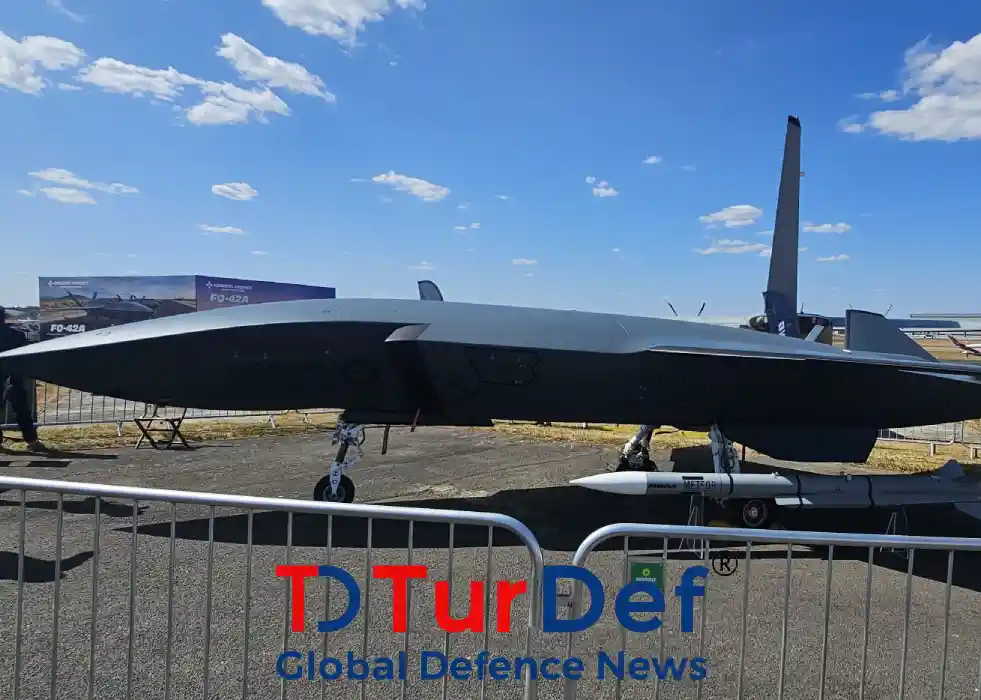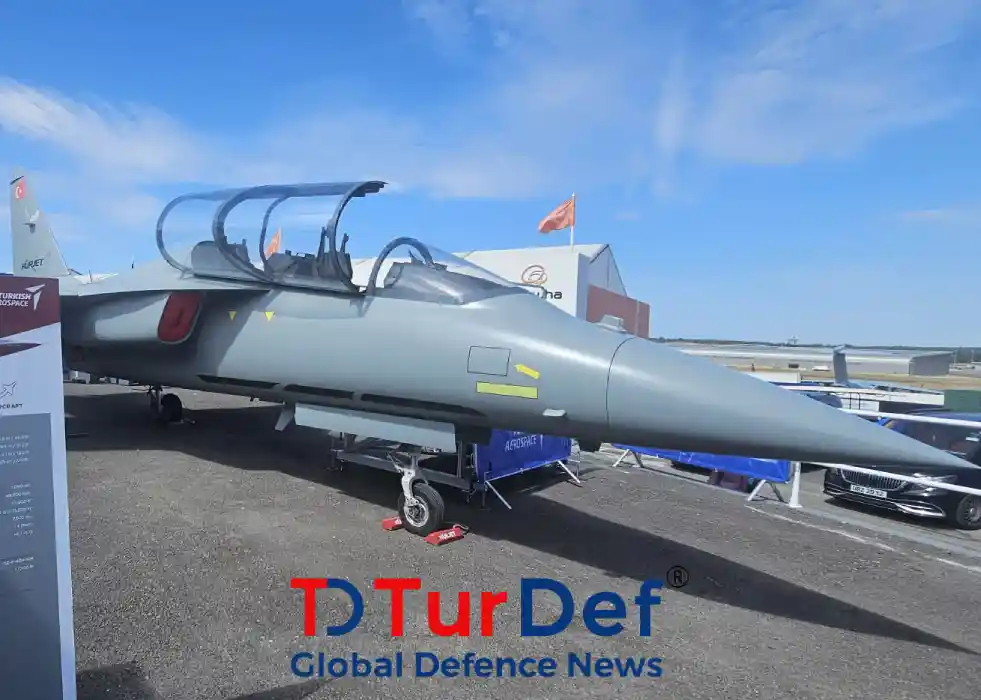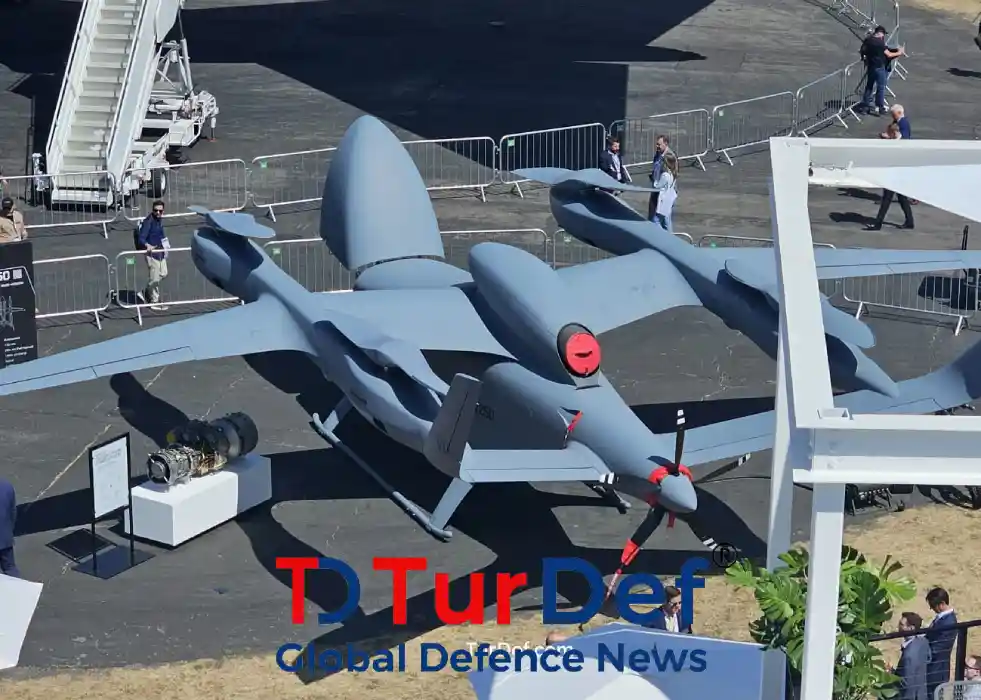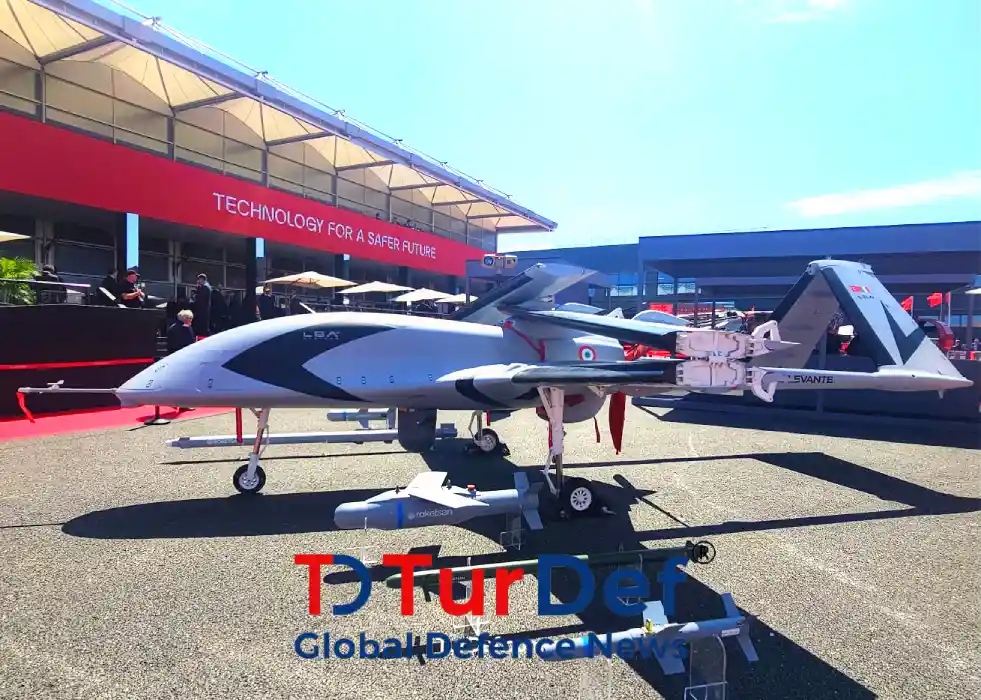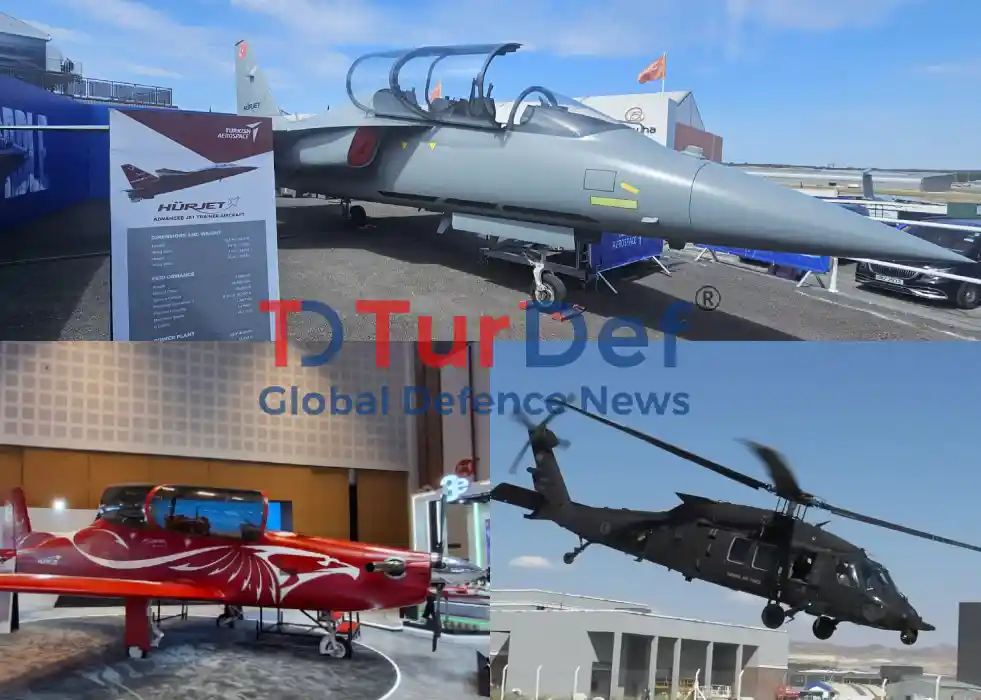
TUSAŞ CEO Mehmet Demiroğlu has provided updates on ongoing and future projects during TUSAŞ’s press conference at the Farnborough International Airshow.
TUSAŞ's CEO Mehmet Demiroğlu said the first official HÜRKUŞ delivery is due in early August; also provided updates on HÜRJET, KAAN's engines and the T70 utility helicopter programme.
First Official HÜRKUŞ Delivery Set for Early August
TUSAŞ plans to make the first official delivery of the HÜRKUŞ trainer aircraft to the Turkish Air Force in early August, company CEO Dr Mehmet Demiroğlu said during a press briefing at the Farnborough International Airshow (FIA).
One HÜRKUŞ has already been handed over to the Turkish Air Force. However, the aircraft is being used primarily by instructor pilots to develop the training syllabus and prepare the wider training programme ahead of formal deliveries.
“So, in early August, this will be the official delivery of the first one,” Demiroğlu told international media.
The distinction means that the aircraft currently with the Air Force is supporting preparations for entry into service. At the same time, the formal acceptance and delivery process will begin with the aircraft scheduled for early August.
Demiroğlu did not disclose how many aircraft would be included in the initial batch or provide a timetable for subsequent deliveries.
Possibility of MUM-T Between Legacy Fighters and TUSAŞ Platforms
TurDef inquired about the possibility of teaming legacy fighters with TUSAŞ’s new generation unmanned platforms like ANKA-III UCAV and SÜPER ŞİMŞEK UAV.
Demiroğlu left the door open to the possibility by pointing out the MoU signed with BAE Systems not long ago:
“As you know, last year we signed an agreement with BAE Systems to work on a number of areas, including this topic. It is not a concrete project yet to utilise ANKA-III with existing platforms such as Typhoon or others.”
HÜRJET Fleet Nears 500 Flight Hours
Demiroğlu also provided an update on the HÜRJET advanced jet trainer and light combat aircraft programme, saying that its two flying prototypes had accumulated almost 500 flight hours.
“HÜRJET is currently going very well. Our two prototypes have reached nearly 500 flight hours,” he said.
Four additional prototypes are under development and are expected to begin flying before the end of 2026. The expanded fleet will support the programme’s flight-test, qualification and configuration-development activities.
TUSAŞ is also working on light-attack and naval configurations of the single-engine aircraft.
“We are working on the light-attack and naval forces configurations, again with a single-engine design,” Demiroğlu said.
The General Electric F404 engine currently powers HÜRJET. Demiroğlu said the company could examine another engine from the same family if additional thrust were required for future configurations, giving the fact that F404 and F414 are identical engines with different settings to satisfy different thrust levels.
It is understood from Demiroğlu’s example that TUSAŞ anticipates higher thrust requirements from at least one of the combat configurations mentioned, and the carrier-based variant to comply with STOBAR/CATOBAR operation with a higher thrust engine would not be a surprise.
Ten F110 Engines Held for KAAN Prototypes
Addressing the KAAN national combat aircraft programme, Demiroğlu said TUSAŞ already had ten General Electric F110 engines in stock for its prototype aircraft.
“We already have ten F110 engines in our inventory for the prototypes,” he said.
Demiroğlu also said the principal export-approval stage for a further 80 engines had effectively been completed as of 9 July.
“We can say that, as of 9 July, we received the export licence for another 80 engines. The rest consists of standard procedures,” he said.
TUSAŞ will work with GE Aerospace to align engine deliveries with KAAN’s production schedule. Demiroğlu said the company had approximately two to two and a half years before serial production and did not expect the availability of the engines to delay that timetable.
“We will work with the GE team to receive the engines on time,” he said. “We have two to two and a half years before serial production. We do not see any problem in receiving these engines in time to support production.”
The F110 engines are intended to support KAAN’s prototype and initial production phases while Türkiye continues development of an indigenous engine for later aircraft configurations.
T70 Agreement Covers 39 Additional Helicopters
Demiroğlu also addressed the T70 General Purpose Helicopter programme, saying that TUSAŞ and Sikorsky had reached an agreement at the beginning of 2026 covering 39 additional helicopters.
“This year, we reached an agreement with Sikorsky for another 39 units, and we received the export licence for that programme,” he said. “We do not see any problem in this regard.”
The T70 is based on the Sikorsky S-70i Black Hawk and is produced in Türkiye under the Turkish Utility Helicopter Programme. The helicopters are fitted with Turkish avionics and self-protection systems depending on the configuration.
Demiroğlu said contractual provisions concerning the end user had been revised to overcome complications associated with US sanctions imposed under the Countering America’s Adversaries Through Sanctions Act.
“To overcome the problems we experienced with CAATSA, we made a change in the contract concerning the end user,” he said.
He did not disclose the revised end-user arrangement or provide a delivery schedule for the additional helicopters.
Author: Özgür Ekşi & Kaan Azman
Editor:Özgür Ekşi