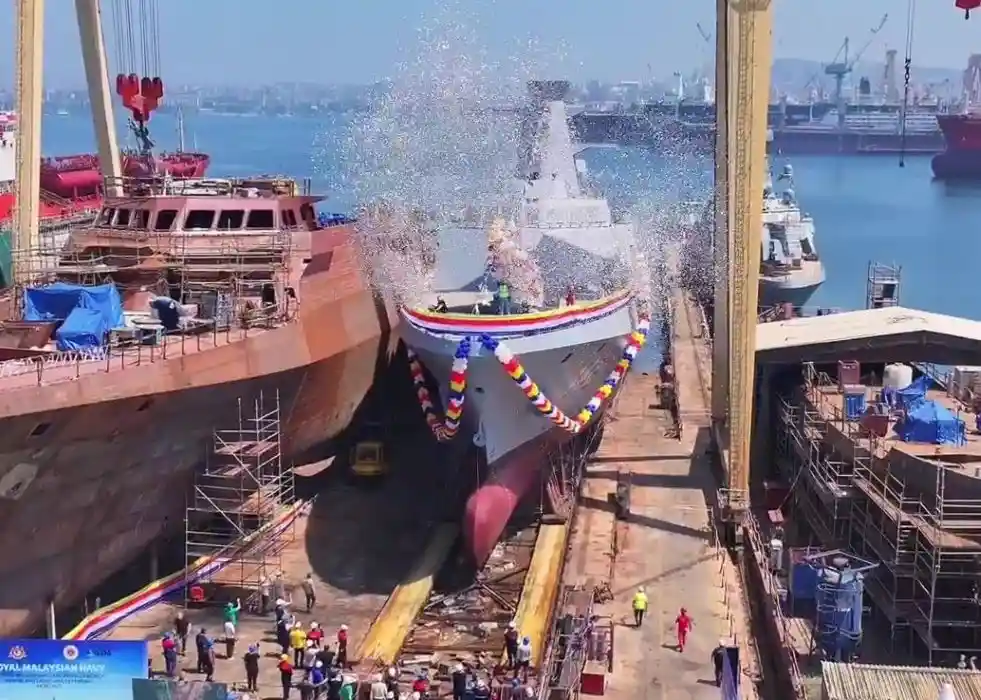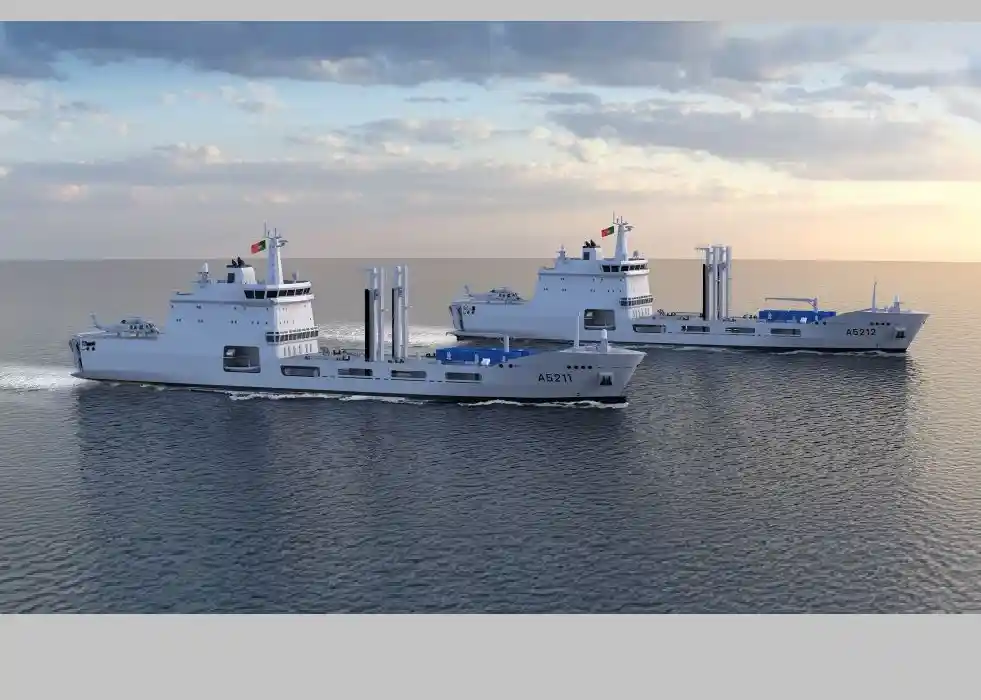
The steel cutting ceremony for the second logistics support ship being built for the Portuguese Navy has been held in Istanbul, marking another milestone in what has become one of Türkiye’s most significant naval export programmes.
The ceremony, held on 18 June, officially launched construction of N.R.P. D. DINIS (A5212), the second vessel in a two-ship programme led by STM. The project represents the first export of a Turkish-built naval vessel to a European Union and NATO member state.
While the event itself marks progress in construction, the broader significance of the programme extends beyond shipbuilding. The contract reflects the growing acceptance of Turkish naval engineering capabilities within NATO and demonstrates how Türkiye's defence industry is increasingly becoming part of allied procurement decisions.
STM secured the Portuguese Navy contract in December 2024 after competing against established international shipbuilders, including European rivals operating in one of the continent’s most traditional maritime markets. Following completion of the design phase, construction of the lead ship began in late 2025 and its keel was laid in January 2026. Work is continuing on the first vessel while construction has now formally started on the second ship.
The programme is notable because Portugal occupies a unique place in European maritime history. As the homeland of explorers such as Vasco da Gama and Ferdinand Magellan, the country helped shape the Age of Discovery and remains one of Europe’s most recognisable maritime nations. As a NATO ally and a member of the European Union, Portugal represents a demanding market where naval procurement decisions are closely tied to operational requirements, industrial credibility and long-term confidence. Winning such a contract therefore represents more than an export success; it is a significant endorsement of Turkish naval design, engineering and project management capabilities.
Speaking at the ceremony, STM Deputy General Manager Bülent Soydal said the company was proud to support the Portuguese Navy with NATO-compliant platforms and noted that STM currently contributes to the naval capabilities of several allied and partner nations.
The vessels are being constructed by STM as prime contractor together with ADA Shipyard. Both ships are scheduled to be launched in 2027 and delivered to the Portuguese Navy in 2028.
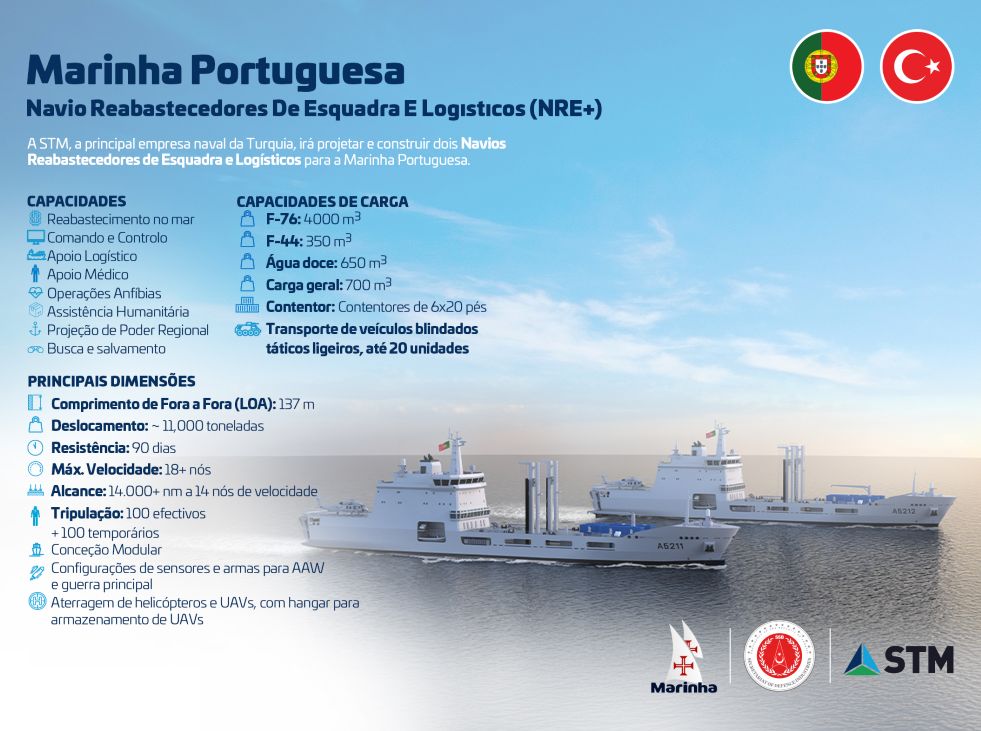
The ships themselves are designed as multi-role logistics support platforms. In addition to replenishment-at-sea missions, they will be capable of transporting military vehicles, supporting amphibious operations, conducting humanitarian assistance missions and providing medical support during crises.
With a length of 137 metres and displacement exceeding 11,000 tonnes, the vessels will be able to remain at sea for up to 30 days. Each ship will carry around 100 personnel and transport up to 20 light tactical armoured vehicles through a stern ro-ro ramp.
The platforms will also feature command-and-control systems, close-in weapon systems, remotely controlled weapon stations, decoy launchers and facilities for helicopter and unmanned aerial vehicle operations.
The timing is also notable. Across Europe, governments are increasing defence spending, naval modernisation programmes are accelerating, and shipyard capacity is becoming an increasingly valuable strategic asset. As European navies seek to expand and renew their fleets, shipbuilders capable of delivering modern platforms on schedule are attracting growing attention.
According to Turkish naval and defence industry officials, 41 military vessels are currently under construction in Turkish shipyards, a figure expected to rise to 50 in the near future. The programmes range from submarines and frigates to offshore patrol vessels, logistics ships and unmanned naval platforms, reflecting the scale of Türkiye’s ongoing naval modernisation and shipbuilding activity.
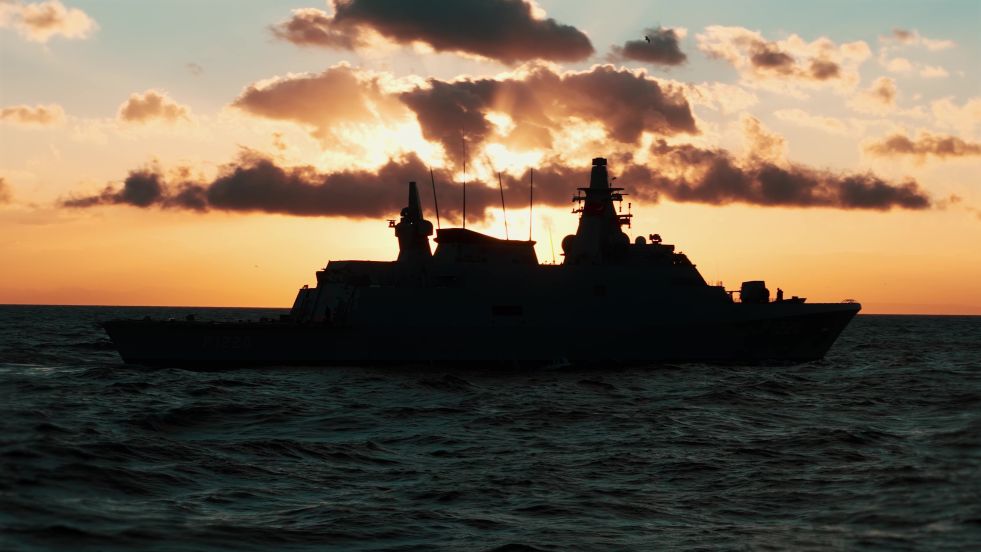
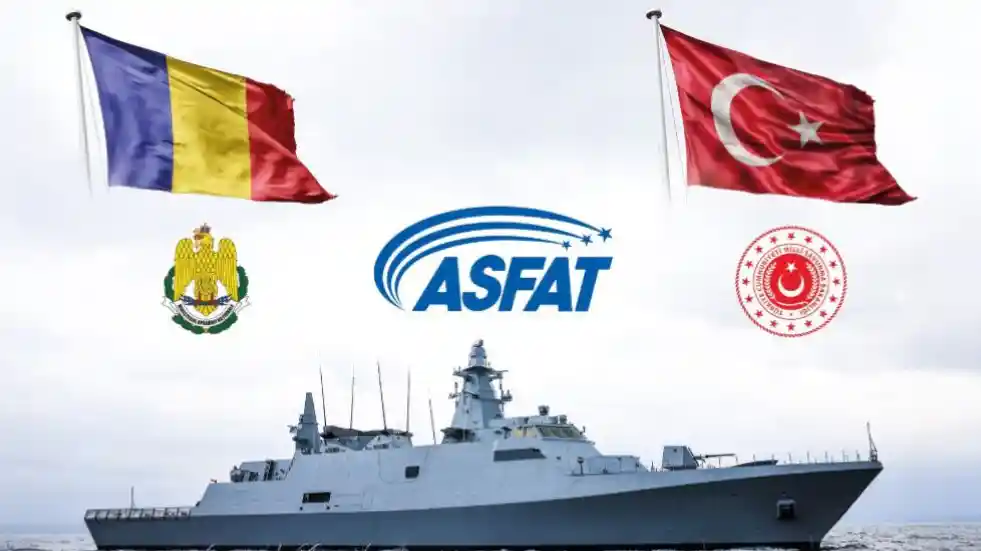
The development comes as another Turkish-built naval vessel is preparing to enter service with a NATO navy. On 20 June, ASFAT is expected to transfer CAm. Roman (261) to the Romanian Navy. Built at Istanbul Naval Shipyard (ITK), the vessel will enter Romanian service as a light corvette.
Romania's return to a Turkish-built platform is notable in a broader context. Bucharest's long-running corvette programme was originally expected to deliver more heavily armed surface combatants through a European-led solution. However, repeated delays and contractual disputes prevented the programme from moving forward. As the Romanian Navy sought to modernise its fleet, a Turkish-built platform ultimately emerged as the fastest available route to introducing a new combat vessel into service.
At the same time, the Turkish Navy is scheduled to commission TCG Koçhisar (P-1221), further expanding its own fleet with another domestically built platform. The commissioning highlights how Turkish naval programmes are now simultaneously supporting export projects and domestic fleet modernisation.
The three developments involve different programmes, different customers and different missions. Yet together they illustrate the growing capacity of Türkiye's naval industry to support both domestic requirements and allied navies simultaneously.
Portugal and Romania arrived at Turkish naval programmes through different paths. Portugal selected STM after a competitive tender process involving established European shipbuilders. Romania turned to a Turkish-built solution after years of delays in its own naval modernisation efforts. Yet both cases point to the same conclusion: Turkish naval programmes are becoming increasingly difficult to ignore within NATO's maritime marketplace.
Author: Özgür Ekşi