EFES 2026: Turkiye to NATO? or NATO to Turkiye?
Chapter II: Transformation
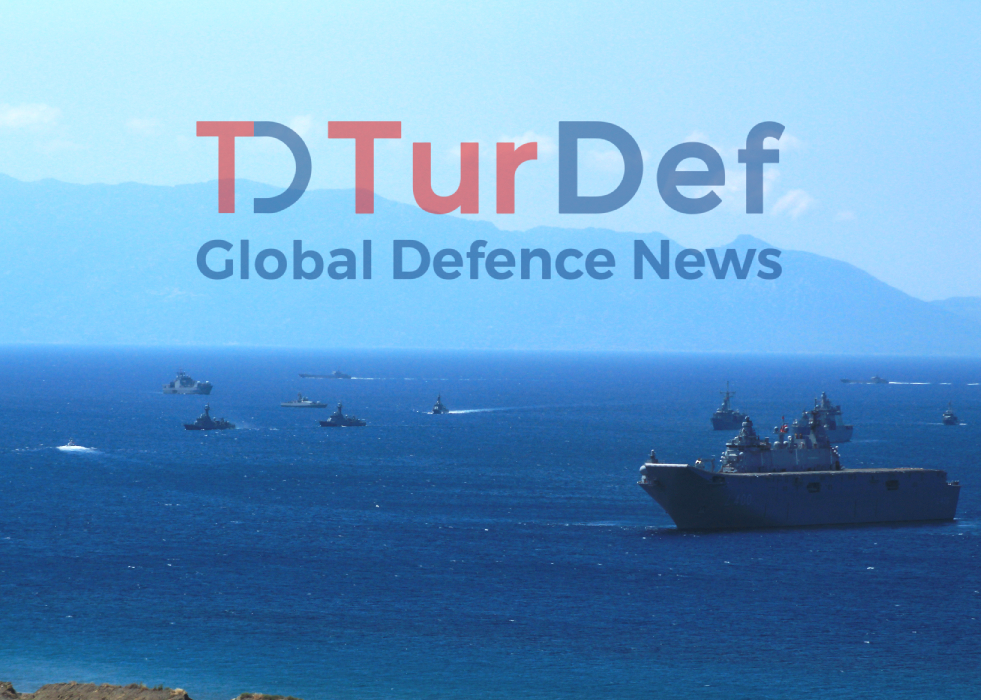
The Turkish Armed Forces completed the Efes 2026 Exercise last week. Domestic systems and weaponry manufactured by the Turkish defence industry were also extensively used during the operation.
The Turkish Armed Forces completed the Efes 2026 Exercise last week. This exercise, which serves as an example of the Multi-Domain Warfare concept, involves the extensive use of domestically produced weapons and systems. This factor is instrumental in ensuring the future of both the Turkish defence industry and the Turkish Armed Forces.
Information
The momentum gained from technological advances has also permeated the changing nature of warfare. In an environment where novel insights are being acquired on a daily basis -a trend fuelled by the ongoing battles and conflicts- and where these insights are reflected in concepts and doctrines, the most dangerous weapon is the information.
It is evident that this change and transformation has also affected Efes 2026. In its early years, the exercise was based on the concept of combined arms warfare. This involved offsetting the weaknesses of one weapon system with the strengths of another. These systems were then coordinated simultaneously against the same target. In addition, they were synchronised to complement one another. The aim was to keep the enemy in a constant state of dilemma whilst maintaining pressure. The main objective here can be summarised as: “To constantly present the enemy with multiple problems simultaneously.”
Evolution
With the end of the Cold War and the evolution of military doctrines to meet the requirements of the modern battlefield, the Air-Land Battle doctrine, which aimed to strike not only the enemy’s frontline units but also their second and third echelons in the depth simultaneously, was followed by the “Multi-Domain Warfare / Operations” framework, to paralyse the enemy across the entire theatre of operations, is known to have begun to be incorporated into scenarios.
The pervasive implementation of the Anti-Access/Area Denial (A2/AD) concept, a doctrine that emerged following the Air-Land Battle, necessitated the integration of space and cyberspace into the strategic calculus. With their inclusion in the potential theatre of operations, the channels of access to information, which were already strategically positioned, have become more diverse, extensive and complex than ever before. The issues in question have taken shape not merely as areas to be choked, but as an entirely new battlefield known as "information manoeuvres", involving the deliberate dissemination of false information, the misleading of the adversary, and disinformation. Consequently, modern warfare is no longer confined to the sea, land or air. The contemporary concept of modern warfare extends beyond the physical terrain, encompassing a diverse array of domains, including the jamming of enemy satellites, the disruption of navigation infrastructure, the infiltration of information networks, the interference with communications, the incapacitation of the adversary through cyberattacks, and the exploitation of deception and manipulation.
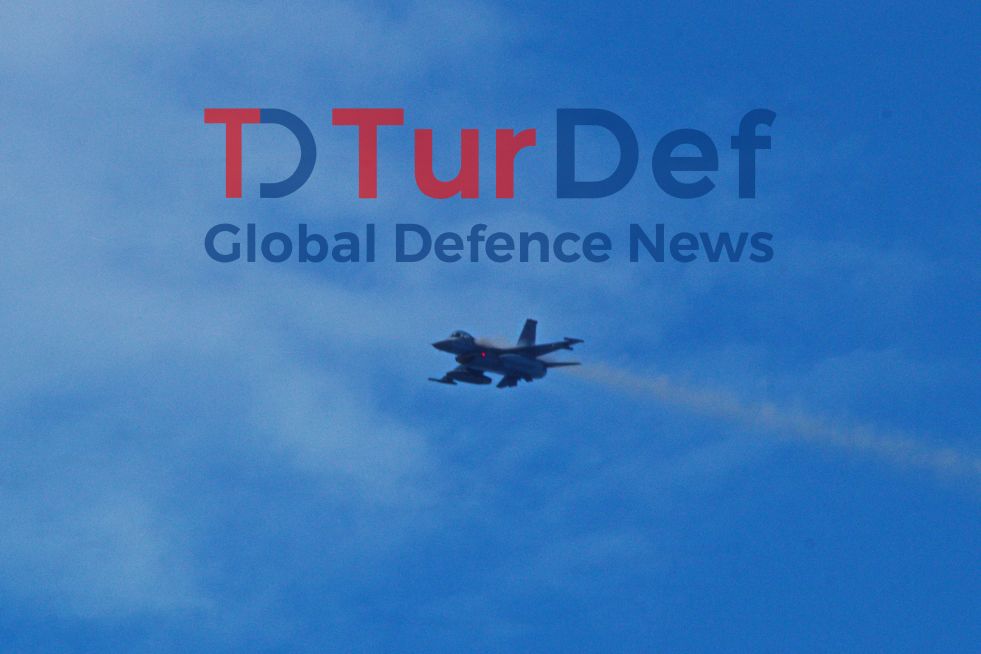 Photo Credit: Halil Zanapalıoğlu
Consequently, the process has evolved from its more simplistic, conventional nature, whereby an aircraft would simply fly in and strike the radar, to a more intricate and multifaceted one. Conversely, within the paradigm of Multi-Domain Operations, the process entails the infiltration of network systems by cyber units, the implementation of electronic warfare assets to disrupt radar, the acquisition of target verification via satellite, the confirmation of the target's location using UAVs, and the subsequent destruction of the target with conventional weapons. This process underscores the pivotal role of intelligence. In summary, all available resources are operating in seamless conjunction within a unified chain of command to accomplish a common objective in the shortest timeframe.
The principles of depth, initiative, agility and synchronisation; extending to encompass the electromagnetic spectrum, cyberspace and outer space, have been re-engineered to process vast amounts of data in the shortest possible time, enabling tactical elements on the field to access the components necessary for strategic success. In this context, combat management systems, artificial intelligence (AI)-powered solutions that enable rapid data processing, and the infrastructure required to ensure a seamless flow of information are, of course, becoming increasingly important in modern warfare.
This year, for the first time, the simulation-supported command post phase of the Efes Exercise was conducted on 24-hour basis. In command and control processes, AI-supported programmes such as the Kocatepe Land-Network Operations Management System, the Military Decision-Making Process (Askerî Karar Verme Süreci / AKVES) and the JTLS-GO Simulation System were actively utilised. Network-Enabled Capabilities (also referred to as Network-Land) were also tested.
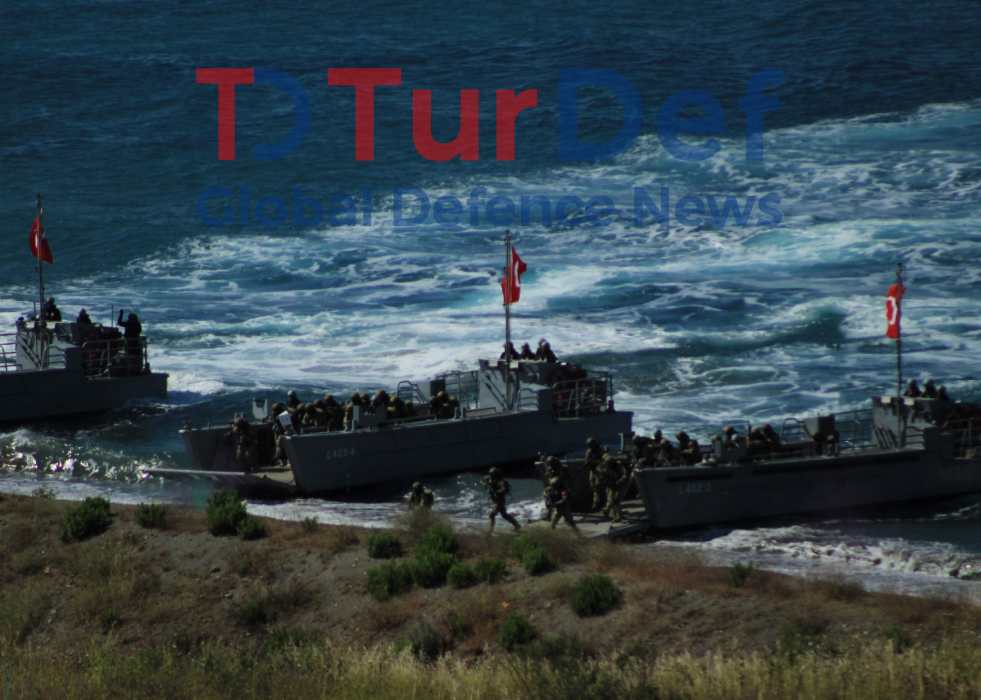
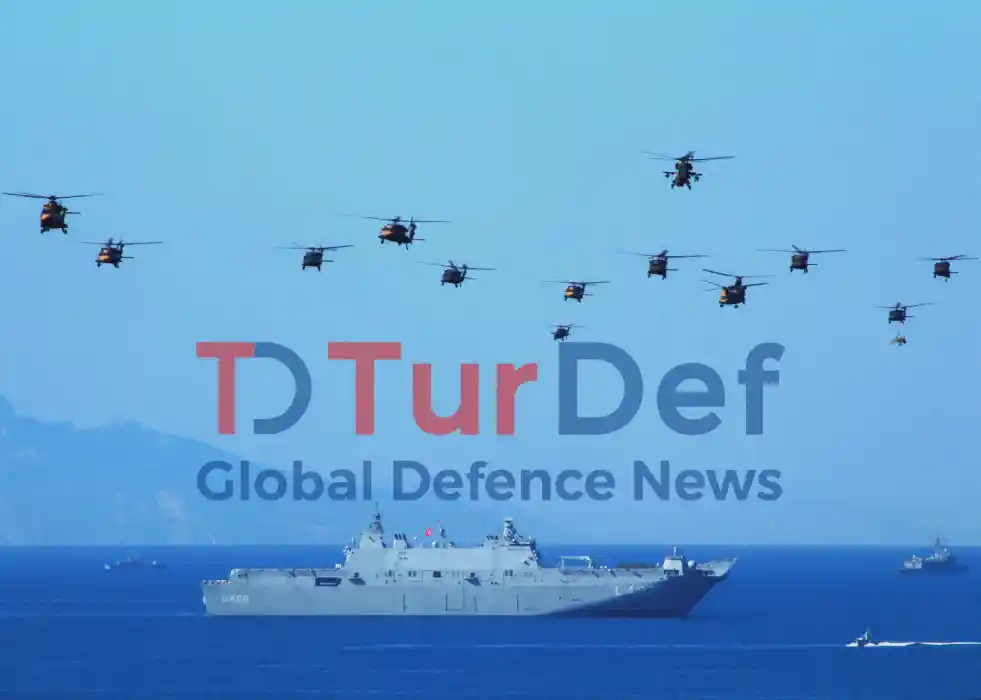
The apparent core of the operation consists of amphibious assaults, air strikes, the capture of a landing beach, penetration deep into enemy territory, combined fire support and the coordination of multinational forces. However, Efes is currently undergoing a rapid evolution towards multi-domain warfare. Because what has been observed on the ground this year is not just a basic amphibious assault. Following the A2/AD penetration, the employment of layered air defence systems, incorporating unmanned aerial vehicle swarms, electronic warfare, network-centric command and control, and targeting chains utilising satellite and data links, became a pivotal aspect of the strategic landscape.
Convergence
The exercise has been argued to be an attempt to address the issue of convergence in multi-domain warfare for the Turkish Armed Forces. The concept of "convergence" can be summarised as the creation of main axis of attack by combining capabilities from different fields, within milliseconds. This is achieved by using artificial intelligence and digital infrastructure to target a specific vulnerability of the enemy. The most important element here is the "window of opportunity".
In the modern warfare, the critical factor is often not firepower, but the speed of decision-making. The sooner the "Find → Fix → Track → Target → Engage → Assess" cycle is followed for target engagement, the faster the path to tactical gains leading to strategic superiority on the ground is opened up. Consequently, heavy and bulky systems are being superseded by mobile and agile hardware. Consequently, the intelligence obtained must be analysed within a very short timeframe by filtering data from five different sources. The objective is therefore to reduce the time taken for the signal to travel from the sensor to the launcher, thus enabling a swift execution of the attack. In summary, the primary objective is to interfere with the enemy's decision making process, to produce a significant effect, and to gain the advantage by combining the effects from multiple operational areas on a single target within the same time frame.
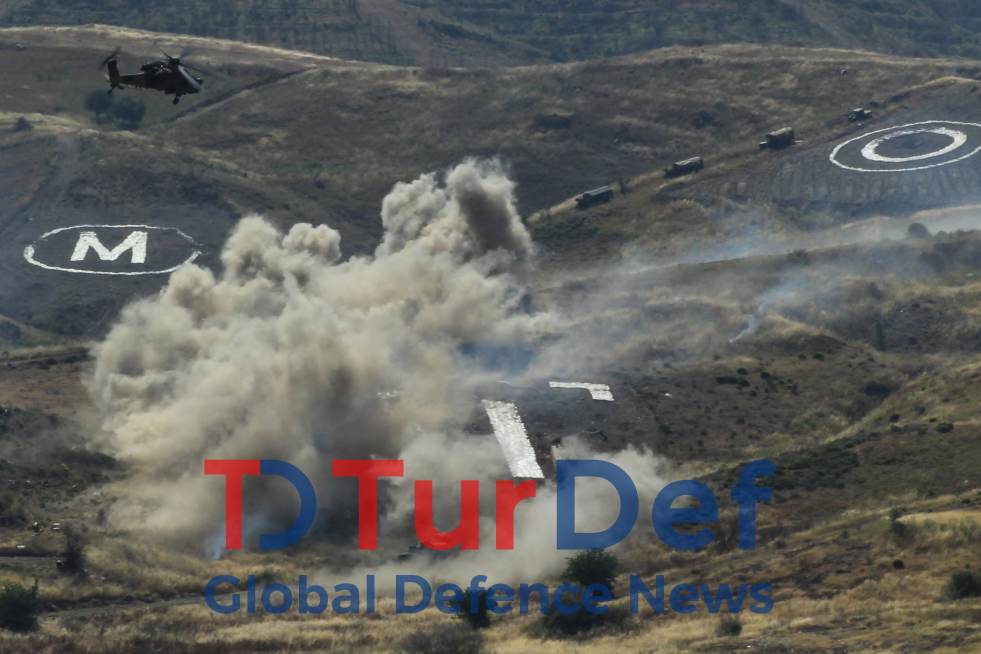 Photo Credit: Halil Zanapalıoğlu
In processes that proceed through a cycle involving sensor detection, artificial intelligence, operator decision-making and the neutralisation of the target, the implementation of Agnostic Sensing is essential. The significance of the data's sourcing, whether from unmanned aerial vehicles, satellites, forward or maritime patrol aircraft, a frontline infantryman's helmet-mounted camera, or a ship's radar, is of secondary importance. Of primary importance is the continuous scanning of the area and the transmission of the data to common cloud.
The next step involves processing and transforming the petabytes of data flowing into the cloud into usable information. This process would take hundreds of years if carried out by human operators. This is precisely where artificial intelligence comes into play. The employment of algorithms that have been specifically trained to rapidly identify and analyse hostile elements, thereby calculating the fastest, most effective and lowest-cost option for neutralising the target, AI Matchmaking, is an indispensable component of convergence.
Data Flow
It is inevitable in future conflicts that hostile forces will create an A2/AD bubble. Conventional methods of overcoming such barriers are rendered virtually impossible when applied in the present context. Convergence aims to plunge decision-making processes into darkness by creating a cloud of uncertainty like a false solar eclipse through the simultaneous suppression, spoofing and manipulation of the enemy. The establishment of a node is a prerequisite for the execution of all these processes.
The establishment of these essential systems has been initiated with the integration of Kocatepe and ADVENT. Today, software and console systems developed using domestic resources act as the "brain" of maritime and land-based assets and as the "maestro" ensuring their flawless coordination when it comes to processing data, transforming it into information and distributing it once the target has been identified.
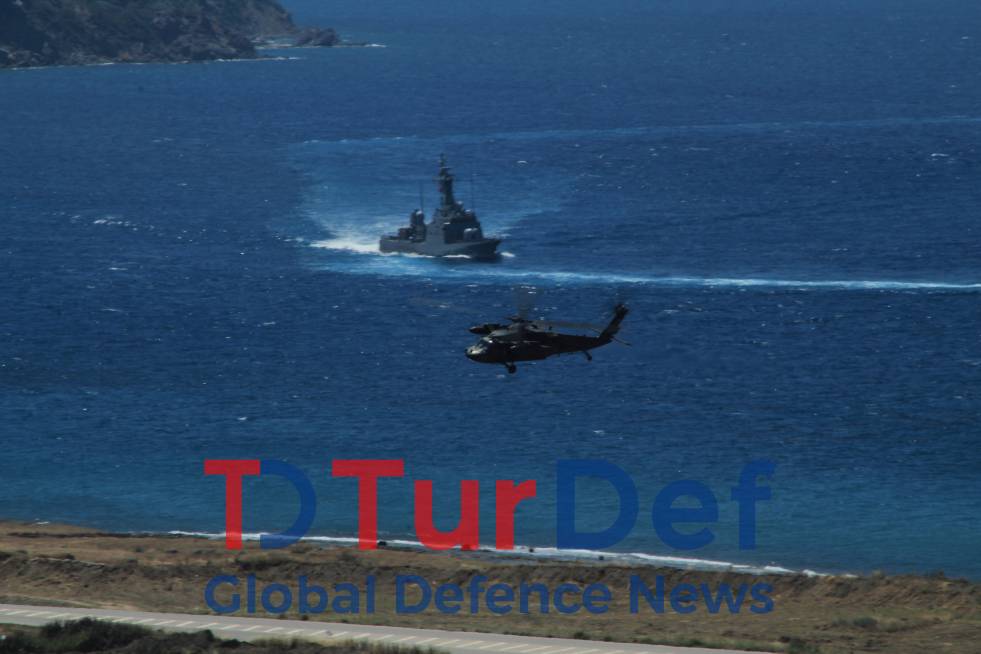
Photo Credit: Halil Zanapalıoğlu
Conclusion
A close reading of the text reveals that the situation has long since transcended the confines of a conventional amphibious operation. Efes 2026 is a military operation of considerable complexity. It is a high-intensity joint operation that is to be executed in the coastal region. It is being conducted under electronic warfare pressure and is being coordinated by data, information and command-and-control systems supported by artificial intelligence. It is also being supported by unmanned systems and sensors across all three domains. Furthermore, the operation incorporates space and cyberspace.
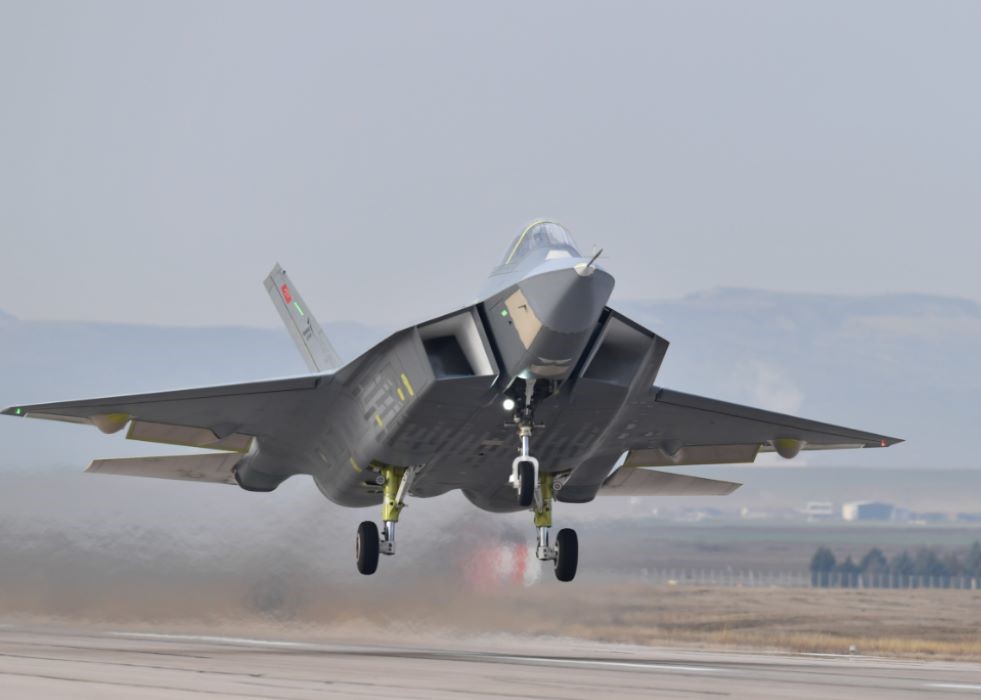
The exercise is of particular significance as it demonstrates the Turkish Armed Forces' capabilities in both joint and autonomous warfare. Furthermore, it provides an excellent opportunity to observe how effectively the transition from platform-centric warfare to network-centric warfare is being managed.
The third chapter of the article examines the Turkish Armed Forces' transition to multi-domain warfare. You can access the first and third chapters via the link provided below;
EFES 2026: Turkiye to NATO? or NATO to Turkiye? / Chapter-I
EFES 2026: Turkiye to NATO? or NATO to Turkiye? / Chapter-III
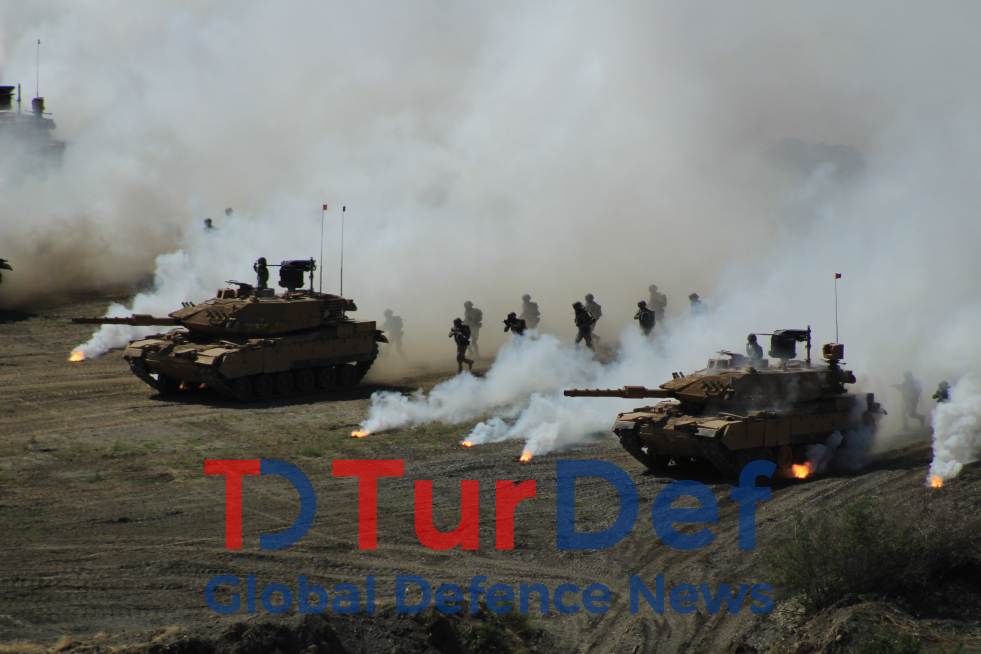
Photo Credit: Halil Zanapalıoğlu
Author: Halil Zanapalıoğlu
Editor: Özgür Ekşi